
Destoner
De-stoner is a density-based separator used to remove stones and heavy contaminants from Paddy, rice Wheat, pulses, spices, maize, soya bean, and more.
De-stoner is a density-based separator used to remove stones and heavy contaminants from Paddy, rice Wheat, pulses, spices, maize, soya bean, and more.
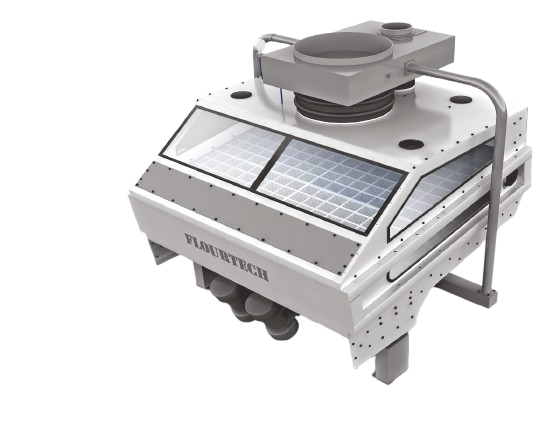
Step-by-step process for efficient grain cleaning and impurity removal

Feeding raw grains into the machine

Removes impurities and dust using sieves and airflow.

High-quality and Clean grain is collected.

Grain moves to the next stage for further processing.
Ensures higher efficiency and reduces load on downstream machines
| Model | Capacity (MT/Hrs.) | Dimensions (mm) | Weight | Power Req. | |||
|---|---|---|---|---|---|---|---|
| Rice | Paddy | Length | Width | Height | |||
| FTRDS-100 | 5 | 3 to 4 | 1650 | 1255 | 1950 | 550 | 0.5HP × 2 = 1 HP |
| FTRDS-120 | 7 | 5 to 6 | 1650 | 1400 | 1950 | 550 | 0.5HP × 2 = 1 HP |
| FTRDS-150 | 9 | 7 to 8 | 1650 | 1700 | 1950 | 750 | 1HP × 2 = 2 HP |
A destoner machine is used to remove stones and other heavy impurities from grains like rice, wheat, and pulses before further processing. It helps improve grain quality and protects milling machines from damage.
It helps protect downstream machines, improves product quality, and reduces the chance of damage during milling or grinding.
A destoner machine separates stones from grains by using vibration and air flow. Heavy stones move in a different direction from the lighter grains, making them easy to remove.
Yes, a destoner machine needs regular maintenance, which includes cleaning, vibration check, screen inspection, and airflow adjustment. This helps the machine run smoothly, improves separation efficiency, and increases the machine’s working life.
It is designed mainly for heavy impurities like stones, sand clumps, and metal-like dense particles, not light impurities such as husk or dust.
Yes, it is widely used in both flour mills and rice mills as an important pre-cleaning or cleaning machine.
If stones are not removed before grain processing, they can cause serious problems in the milling process. Stones may damage important machines like grinders, rollers, and polishers, leading to machine wear, breakdowns, and costly repairs.
They can also reduce the quality of the final product, as small stone particles may mix with the grains. This affects food safety, product purity, and customer trust.
That’s why a destoner machine is an important step in grain cleaning, ensuring safer processing, protecting equipment, and maintaining high-quality grain output.
Yes, it is available in different capacities, making it useful for both small and large grain processing setups.
Ensure cleaner grain, reduce machine load, and improve overall plant performance with our advanced destoner machine.
 Wheat Milling
 Rice Milling
 Pulse Milling
 Maize Milling
 Soyabean Milling