In today’s fast-paced food processing industry, producing high-quality flour efficiently requires advanced machinery. wheat grinding machines have become essential for both small-scale bakeries and large industrial mills. They ensure wheat is processed quickly, consistently, and with minimal waste, making them a critical part of modern milling operations.
These machines not only increase production efficiency but also maintain the nutritional value of flour. With innovations in technology, modern wheat grinding equipment ensures better yield, uniform texture, and hygienic processing, meeting the growing demand for safe and high-quality food products worldwide.
What Are Modern Wheat Grinding Machines?
Modern wheat grinding machines mark a significant shift from traditional milling methods. By using advanced engineering, they efficiently crush and grind wheat kernels into fine, nutrient-rich flour, preserving essential fiber, proteins, and vitamins while ensuring consistent quality and minimal waste.
Types of Wheat Grinding Machines
- Roller Mills – Use two or more steel rollers to gradually crush wheat kernels. This roller mill is ideal for producing fine, uniform flour.
- Hammer Mills – Feature fast-spinning hammers that break wheat into small particles quickly. Suitable for high-speed production.
- Pin Mills – Use high-speed rotating pins to grind wheat into fine, uniform particles. Ideal for specialty flours.
- Stone Mills (Modern Versions) – While rooted in traditional design, modern stone mills have evolved to include advanced controls and superior materials, improving efficiency and minimizing contamination.
How Modern Wheat Grinding Machines Work
Modern wheat grinding machines combine mechanical and automated systems to produce high-quality flour efficiently. They focus not only on grinding wheat but also on preserving nutrients, maximizing yield, and maintaining hygiene.
Features of Advanced Machines
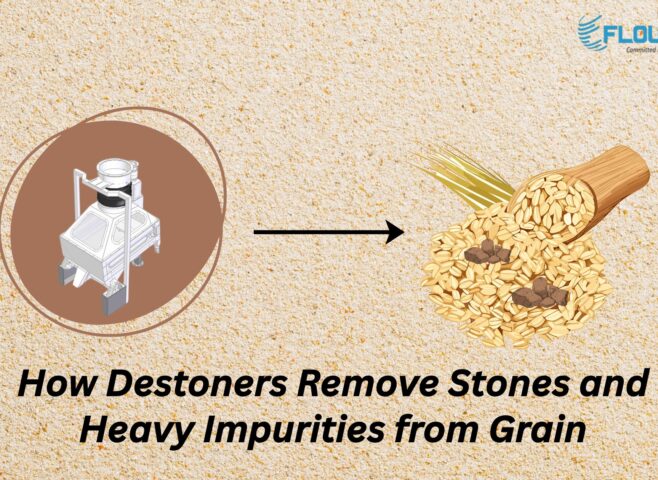
- Pre-Cleaning Units – Remove stones, dust, and foreign particles before milling.
- Tempering Chambers – Moisturize wheat slightly to improve grinding efficiency.
- Adjustable Rollers or Hammers – Allow customization for different wheat types and flour fineness.
- Sifting and Separation Systems – Built-in sifters automatically separate coarse bran from fine flour.
- Automated Controls – Touchscreens, sensors, and alerts help operators monitor and maintain performance.
- Hygienic Construction – Stainless steel and food-grade materials prevent contamination.
These features make modern machines reliable, energy-efficient, and suitable for continuous large-scale production.
Step-by-Step Wheat Grinding Process
Producing premium-quality flour involves a structured process:
- Cleaning and Sorting – Wheat is cleaned to remove impurities such as stones, dust, and husks.
- Tempering or Moistening – Wheat is slightly moistened to soften the bran and improve milling efficiency.
- Grinding – Wheat is crushed using modern roller mills, hammer mills, or pin mills to achieve fine, uniform particle size.
- Sieving and Separation – Flour is sifted to separate fine powder from coarser particles.
- Packaging – Modern machines often include automated packing systems to ensure accurate weight and hygiene.
Benefits of Modern Wheat Grinding Machines
Investing in modern wheat grinding equipment brings multiple advantages:
- High Efficiency – Can process large volumes quickly, reducing production time and labor costs.
- Consistent Flour Quality – Delivers uniform texture, color, and composition, essential for bakeries and food manufacturers.
- Nutrient Preservation – Maintains natural proteins, fiber, and vitamins, producing healthier flour.
- Reduced Waste – Precision grinding and automated separation maximize yield and minimize loss.
- Easy Operation – Touchscreens, automated alerts, and maintenance features simplify operation, even for unskilled staff.
- Hygienic and Safe – Constructed from food-grade materials, reducing contamination risk.
- Versatility – Adjustable settings allow production of different flour types, from fine wheat flour to specialty flours.
- Energy-Efficient – Advanced designs reduce power consumption and operational costs.
- Scalable for Growth – Suitable for both small and large-scale milling operations, supporting business expansion.
Conclusion
Modern wheat grinding machines have transformed the process of flour production. These machines handle everything from cleaning and tempering to grinding and sieving, ensuring that the flour is nutritious, consistent, and versatile. Advanced equipment increases productivity, minimizes waste, and maintains high quality while adhering to food safety standards. For milling and baking professionals, mastering these machines is essential for achieving efficiency and reliable results.
For more information about modern wheat grinding machines and other solutions, please connect with us throgh +91-9663594709 or visit our website at www.flourtech.com.