
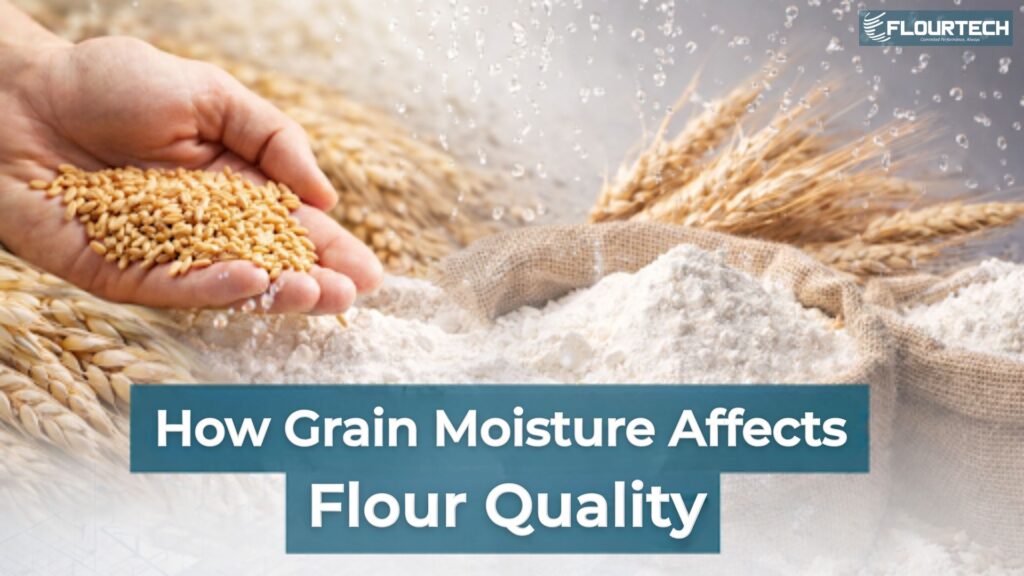
The quality of flour begins before the milling of wheat. One of the most crucial factors which affect the final flour condition is grain moisture. The quantity of water present in grains before the milling process performs an important role in milling process, flour yield, texture, and mostly functionality. Even small variations in moisture can make small changes in the behavior of grains during the processing.
This knowledge is highly essential to millers, quality controllers, and food processors who desire to make consistent and high quality flour.
What is Grain Moisture?
Grain moisture is clarified as the percentage of water present in cereal grains like wheat, corn, rye, or barley. Grains that have been freshly harvested control moisture, and this must be well-checked on during storage and milling.
The value of moisture content is commonly calculated in the terms of percentage of the total weight of the grain. Maintaining the correct moisture level is essential because it directly influences: It is necessary to correct the appropriate amount of moisture because it direct impact on:
- Milling efficiency
- Flour extraction rate
- Particle size
- Protein performance
- Storage stability
Whether grains are too dry or too wet, this may have a negative effect at all levels of flour production.
Why Grain Moisture Matters for Flour Quality
1. Milling Efficiency and Flour Yield
The moisture content of the grain affects the behavior of wheat during the flour milling process.
- In case, when grains are too dry, they become hard and break during grinding.
- This leads to excessive fine particles and low consistency flour quality.
- Grains that are very dry may also affect flour extraction rates.
On the other hand:
- In case, when grains have extra moisture, then they become too soft and sticky.
- This has the capacity to block the space within rollers and sieves.
- Milling equipment may be exposed to more damage and operational problems.
The ideal moisture conditioning is guaranteed to make smooth milling operations and healthier flour.
2. Consistency in Flour Texture
The Grains maintained in constant moisture levels allow grains to separate properly during the milling process into endosperm, bran, and germ. This is important for the separation of fine, uniform flour quality.
Irregular moisture can cause:
- Uneven particle sizes.
- Bad sifting performance.
- Variations in flour appearance.
The combination of grains in good condition leads to more pleasant work with flour, having a better texture and color.
3. Impact on Protein and Gluten Quality
The strength of gluten and the content of the protein in the flour are major factors that determine the effective properties of flour. The moisture in grain plays an important role in maintaining these characteristics.
Correct moisture conditioning helps in:
- Proper moderate of wheat
- Balanced protein behavior
- Improved gluten quality
Flour made from badly conditioned grains can show weak gluten formation, which impacts on its performance in food processing.
4. Water Absorption Capacity of Flour
One of the most important quality parameters of flour is its capacity to absorb water.
Grain moisture directly affects this property:
- Flour from properly conditioned grains absorbs water evenly.
- It produces stable dough with expected behavior.
- Industrial bakers and food manufacturers take consistent results from high-quality milled flour.
The milled flour of excessively dry grains may take in water unequally, while high-moisture grains may act inconsistently in processing.
5. Shelf Life and Storage Stability
The moisture does not just affect the milling process but also the long-term balance of flour storage.
The high-moisture flour can cause:
- Faster damage
- Mold growth
- Insect infestation
- Malnutritional and functional quality
Maintaining grain moisture as a way of making the end product of the flour more stable and of a longer storage duration.
Ideal Moisture Levels for Quality Flour Production
Different grains require different moisture variety for optimal milling:
- Wheat: 12–14% moisture is compared perfect
- Corn: 14–16% moisture works best
- Rye and Barley: Around 12–13% moisture
These levels should be maintained by proper drying and tempering to produce high-quality flour.
How Millers Can Manage Grain Moisture Effectively
To establish consistent flour quality, millers should follow these best practices:
- Monitor moisture regularly with exact moisture meters
- Use proper grain conditioning and tempering techniques
- Apply modern milling technology
- Maintain controlled storage conditions
- Perform routine flour quality checks
Conclusion
One of the most important factors which influence the quality of flour is grain moisture. Moisture affects all flour production characteristics including milling efficiency and flour texture, water absorption, and shelf life.
Due to appropriate moisture management, it guarantees:
- Higher flour yield
- Consistent particle size
- Improved functional properties
- Constant and high-quality end product
In the case of flour mills, managing the grain moisture is not only a technical issue, but an important step towards the formation of high-quality flour.
Upgrade Your Milling Performance with Smart Moisture Control
At Flourtech Engineers, we provide advanced Flour Milling Solutions designed to help millers obtain accurate grain conditioning and consistent flour quality.
For inquiries, please contact us at +91-9663594709 or email info@flourtechindia.in



Specialty Flour Milling for Consistent Bakery Flour Quality
September 10, 2026[…] bins to soak after water is added. Hard wheat is meant for bread flour, which needs a greater moisture content and a longer tempering period, while soft wheat is meant for cake flour because it needs low […]