The process of establishing a flour mill involves a number of tasks such as the selection of machinery, building layout design, installation, and commissioning. Coordinating different activities separately will increase the project time, create coordination difficulties, and make the project more expensive.
For business owners who are planning to enter the flour milling industry or expand their businesses, it is important to understand that good project planning is a key factor in the success of business operations. However, dealing with different manufacturers, contractors, and engineers can complicate the process of moving through all necessary stages of setup.
This is where a turnkey flour mill plant appears as a suitable solution for the situation. It means that all major tasks are done by a responsible manufacturer, including everything from planning and machinery selection to installation and commissioning. Having better coordination during the implementation of every step allows mill owners to avoid unnecessary delays, control project expenses, and prepare their plants for production activities in an effective way.
What Is a Turnkey Flour Mill Plant?
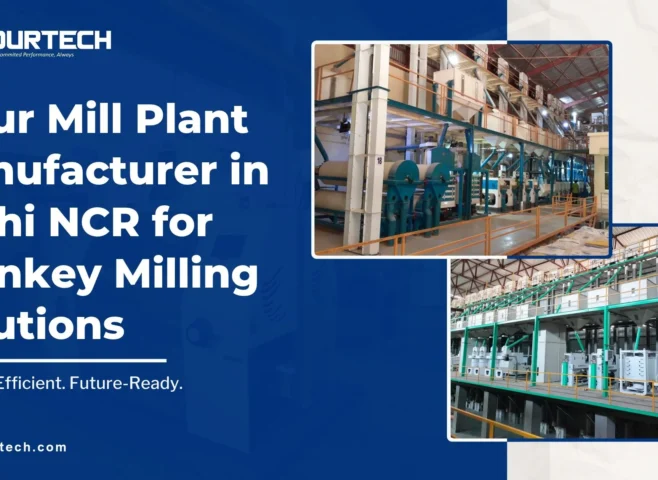
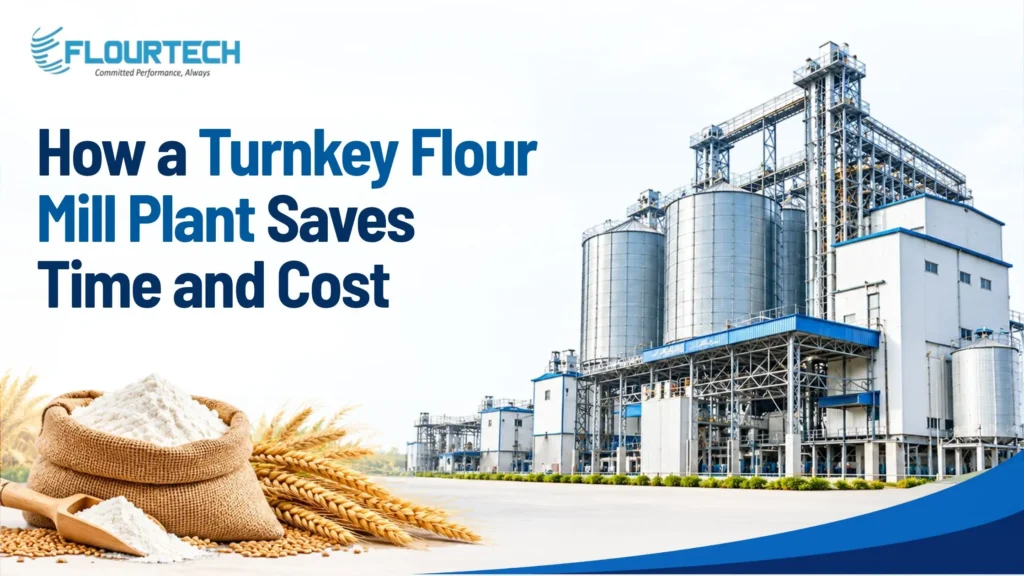
A turnkey flour mill is a complete flour milling solution. It means that one single company is responsible for all stages of the project. Instead of purchasing individual machines from different suppliers and managing installation separately, the mill owner works with a single company for the overall setup.
A turnkey flour mill project generally includes:
- Plant planning and process design
- Machinery manufacturing and supply
- Plant layout and machinery arrangement
- Installation and integration
- Testing and commissioning
- Operator training and technical support
The main purpose is to provide a properly coordinated milling system that is ready to begin operations after successful installation and testing.
For example, when an entrepreneur is thinking about opening a new flour mill facility, a turnkey manufacturer will help him to select appropriate equipment according to the production capacity, available space, wheat quality and business requirements.
This makes the whole process easier to manage, generally for inexperienced owners who may not have an experienced technical team.
How Does a Turnkey Flour Mill Project Work?
A turnkey flour mill project starts with an understanding of the business needs of the mill owner. The manufacturer discusses the production target, available land, budget, wheat quality, and expected flour output.
In accordance with this information, the technical staff designs an appropriate plant layout and chooses the necessary machine equipment. As soon as the layout is approved, production and supply of machines are begun.
When the machinery arrives at the construction site, the equipment installation and integration process takes place according to the planned layout. The complete system is then tested to check machine performance, material flow, and overall functioning. The manufacturer also offers support at the start-up stage to make sure that the plant can work properly.
Since the major project activities are coordinated by one company, communication becomes easier, and the risk of delays caused by multiple suppliers is reduced.
What Does a Turnkey Flour Mill Plant Include?
A turnkey flour mill plant consists of different processing sections, each designed to perform a specific function in the process of converting raw wheat into finished flour. Every section, from initial grain cleaning to final product packaging, works together to ensure smooth and efficient milling operations.
The main sections of a typical flour mill plant are explained below:
1. Cleaning Section
Removes dust, stones, husk, straw, and other impurities from incoming wheat using machines such as rotary separators, destoners, and magnetic separators.
2. Conditioning Section
Adds a controlled amount of moisture to cleaned wheat and allows it to rest in tempering bins, preparing the grain for grinding.
3. Grinding Section
Uses roller mills (Roll Bodies) to gradually break and grind conditioned wheat into smaller particles to achieve the required flour quality.
4. Sifting Section
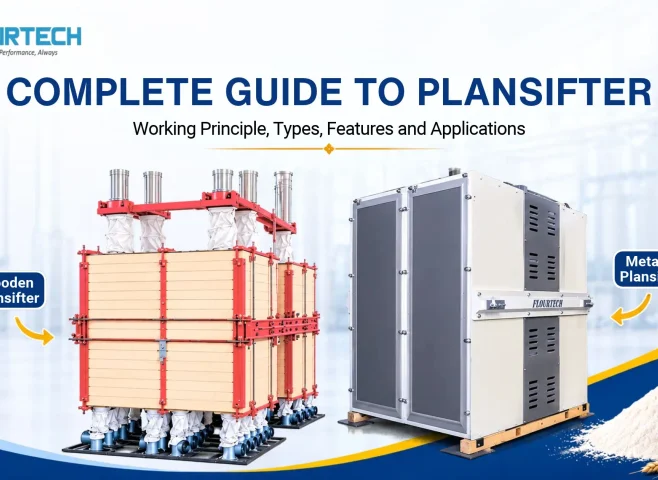
Uses plansifters to separate ground material according to particle size. Fine material moves forward, while larger particles return for further grinding.
5. Purification Section
Uses purifiers to separate semolina particles from bran and other impurities, improving the quality of intermediate milling products.
6. Flour Finishing Section
Uses bran finishers to recover flour remaining attached to bran, helping improve overall flour extraction.
7. Packaging Section
Handles finished flour through weighing and packing machines, preparing it for storage and distribution.
8. Other Supporting Systems
Includes pneumatic conveying systems, bucket elevators, screw conveyors, cyclones, jet filters, and electrical automation systems for smooth plant operation.
These sections make up an integrated flour milling system and are designed in accordance with the required production capacity, available area, and other business needs. Apart from machinery, a turnkey project may also include electrical and automation systems, installation, commissioning, and technical support to ensure smooth plant operations.
How Is a Turnkey Flour Mill Plant Set Up?
Setting up a flour mill requires proper planning because every stage affects the performance of the final plant. A typical turnkey project follows these steps:
Step 1: Understanding Business Requirements
The manufacturer first understands the owner’s business goals, required production capacity, budget, and expected flour varieties. This information helps determine the right plant configuration.
Step 2: Plant Layout and Process Design
A suitable layout is prepared according to the available land and machinery arrangement. Proper planning ensures smooth material movement and makes maintenance easier.
Step 3: Machinery Selection and Manufacturing
Machines are selected based on the required capacity, production process, and automation level. Once the specifications are finalised, manufacturing and quality checks are carried out.
Step 4: Machinery Supply and Installation
The machinery is transported to the project site and installed according to the approved layout. Different machines and supporting systems are connected to create an integrated milling line.
Step 5: Testing and Commissioning
After installation, the plant is tested to check machine performance, material flow, and operational settings. Necessary adjustments are made before commercial production begins.
Step 6: Operator Training and Technical Support
Operators receive guidance on machine operation, basic maintenance, and safety practices. Technical support also helps the mill owner manage the plant more confidently after commissioning.
How Does a Turnkey Flour Mill Plant Save Time and Cost?
A flour mill project involves more than the purchase price of machinery. Expenses related to installation, transportation, utilities, modifications, and project delays can also affect the overall investment.
A turnkey flour mill plant helps manage these requirements through coordinated planning and execution. Here is how it saves time and controls project costs.
1. Single Point of Responsibility
If mill owners purchase machines from different suppliers, they will have to deal with several organizations during the project for specifications, delivery time, installation, and technical matters. However, choosing the turnkey solution means that a large portion of the operations is handled by one manufacturer. This reduces communication gaps, simplifies project management, and saves the time spent coordinating with different suppliers.
2. Better Project Planning
A proper layout of the plant is essential for arranging machines, material flow, and utility requirements before machine installation starts. So, technical experts can identify some anticipated problems at the planning phase rather than making unnecessary changes after machinery has been installed. As a result, the possibility of additional work and expenses can be reduced.
3. Reduced Installation Delays
When you plan machinery supply and installation together, you can coordinate different project activities more effectively. For example, you can select and arrange machinery according to the approved plant layout. This helps avoid problems caused by equipment arriving at different times or machines not matching the planned arrangement. Better coordination can make the installation process more organised and reduce unnecessary waiting periods.
4. Controlled Project Expenses
The integrated project approach makes it easier to understand and determine the equipment requirements and major expenses at early stages. Thus, the mill owner is able to plan their investment according to expected capacity, performance characteristics, and automation level of machinery. The risk of purchasing unsuitable machinery or unnecessary modifications of equipment is minimized.
5. Better Machinery Coordination
Machines in a flour mill work as part of a continuous process. Cleaning, conditioning, grinding, sifting and flour handling sections must work together efficiently. When you select and plan machinery as part of one integrated system, you can maintain proper material flow between different processing stages more easily. This helps reduce coordination issues during installation and plant operation.
6. Faster Start of Commercial Production
Installation, testing, and commissioning are managed as connected project activities. The manufacturer can coordinate the different technical requirements and guide the commissioning stage. This helps mill owners prepare the plant for commercial production without independently managing every technical requirement.
Turnkey Flour Mill Plant vs Individual Flour Mill Sections
When planning a flour milling project, business owners can choose between setting up a complete turnkey flour mill plant or purchasing individual flour mill sections separately. Both options have their own advantages, depending on business requirements, available infrastructure, and investment plans.
| Comparison Basis | Turnkey Flour Mill Plant | Individual Flour Mill Sections |
|---|---|---|
| Project Planning | The complete project is planned according to production capacity and business requirements. | Each section is planned separately based on specific requirements. |
| Machinery Selection | Machinery is selected to work together as an integrated milling system. | Machinery is purchased separately for individual sections. |
| Project Coordination | Major project activities are coordinated by one manufacturer. | The mill owner coordinates with different machinery suppliers. |
| Installation | Installation support is generally managed as part of the project. | Installation is arranged separately for individual machines or sections. |
| Commissioning | The complete plant is tested and commissioned as an integrated system. | Individual sections may require separate testing and commissioning. |
| Time Management | Coordinated execution helps streamline the overall project timeline. | Coordination between multiple suppliers may require additional time. |
| Technical Support | Overall technical support is provided by one manufacturer, as agreed. | Technical support is generally handled by the respective machinery suppliers. |
| Cost Planning | The overall project investment can be estimated during the planning stage. | Costs are calculated separately for machinery, installation and other requirements. |
What Are the Benefits of Choosing a Turnkey Flour Mill Solution?
Apart from saving time and controlling project expenses, a turnkey solution offers several practical benefits for entrepreneurs planning to enter the flour milling industry or expand an existing business.
- Suitable Plant Planning: The plant can be designed according to business requirements, available space and expected production capacity.
- Simplified Project Management: Mill owners have one primary point of contact for major project activities instead of dealing with several suppliers.
- Flexible Production Requirements: Machinery and process configurations can be selected according to the desired flour quality and production needs.
- Automation Options: Depending on the investment and operational requirements, mill owners can choose semi-automatic or fully automatic flour mill plants.
- Technical Assistance: Installation guidance, commissioning, and operator training help make plant operations easier to manage.
- Scope for Future Expansion: A properly planned plant can consider future production requirements and possible capacity expansion.
Whether an entrepreneur is setting up a new flour mill or upgrading an existing facility, the right turnkey solution can help create a more organised and efficient milling operation.
Factors to Consider Before Setting Up a Flour Mill Plant
Before investing in a flour mill plant, business owners should evaluate a few important factors to avoid problems during installation and operation.
- Production Capacity: Decide how much wheat you want to process per day. Machinery selection should match your actual business requirements rather than only your future expectations.
- Available Land and Space: Consider the land area, building height, storage requirements, and space needed for machinery installation and maintenance.
- Machinery Quality: Check the construction quality, technical specifications, and performance of important machines such as roller mills, plansifters, and cleaning equipment.
- Automation Level: Choose between semi-automatic and fully automatic systems based on your budget, labour availability, and production targets.
- Power and Utility Requirements: Understand the electrical load, power consumption, and other utility requirements before finalising the plant design.
- After-Sales Support: Check whether the manufacturer provides installation assistance, spare parts availability, maintenance guidance, and technical support after commissioning.
Considering these factors before starting the project can help mill owners make informed decisions and plan their investment more effectively.
How to Choose the Right Turnkey Flour Mill Plant Manufacturer?
Choosing the right manufacturer is one of the most important decisions when setting up a flour mill plant. A reliable company should offer more than machinery supply. It should understand the complete milling process and provide technical support throughout the project.
Here are a few points to consider:
- Industry Experience: Look for a manufacturer with experience in designing and executing flour milling projects.
- Complete Project Capabilities: Check whether the company can manage planning, machinery manufacturing, installation, and commissioning.
- Machinery Range: Evaluate the quality and range of equipment offered for different stages of flour milling.
- Customised Solutions: Choose a manufacturer that understands your production requirements and suggests a suitable plant configuration.
- Project References: Review completed projects and, wherever possible, understand their operational performance.
- After-Sales Service: Ensure that technical assistance, spare parts, and maintenance support are available when required.
An experienced turnkey flour mill plant manufacturer can help reduce project-related complications and make the overall investment more organised.
Conclusion
There are various stages to set up a flour mill plant. These include project planning, machinery selection, installation, and commissioning, which are difficult to do alone, as it can make the process more complicated, longer, and may cost extra.
A turnkey flour mill plant simplifies this process by bringing major project activities under one responsible manufacturer. From preparing the plant layout and selecting suitable machinery to installation and commissioning, every stage is planned as part of an integrated solution.
This method enables the mill owners to run their projects effectively, remove unnecessary expenses, and prepare their mills for commercial production. With good plant design, right machinery, and dependable technical support, business owners can set up a flour milling business that meets their current requirements and supports future growth.
With over 38+ years of industry experience, Flourtech Engineers provides turnkey flour mill solutions, covering project planning, machinery manufacturing, installation, and commissioning to meet different business and production requirements.
Planning to set up a new flour mill or upgrade your existing facility?
Get in touch with Flourtech Engineers for reliable turnkey flour milling solutions designed around your production requirements.
Visit our website: www.flourtech.com
Call / WhatsApp: +91 8826731010, +91-9663594709