Setting up a flour mill involves more than choosing the right machinery. Decisions about plant capacity, layout, wheat quality, and the overall processing flow can directly affect production efficiency, flour quality, and operating costs.
A well-planned flour mill plant brings these elements together, ensuring that each section works efficiently with the next. For businesses exploring a flour mill plant manufacturer in Delhi NCR, understanding the complete project scope from the manufacturer is a useful starting point.
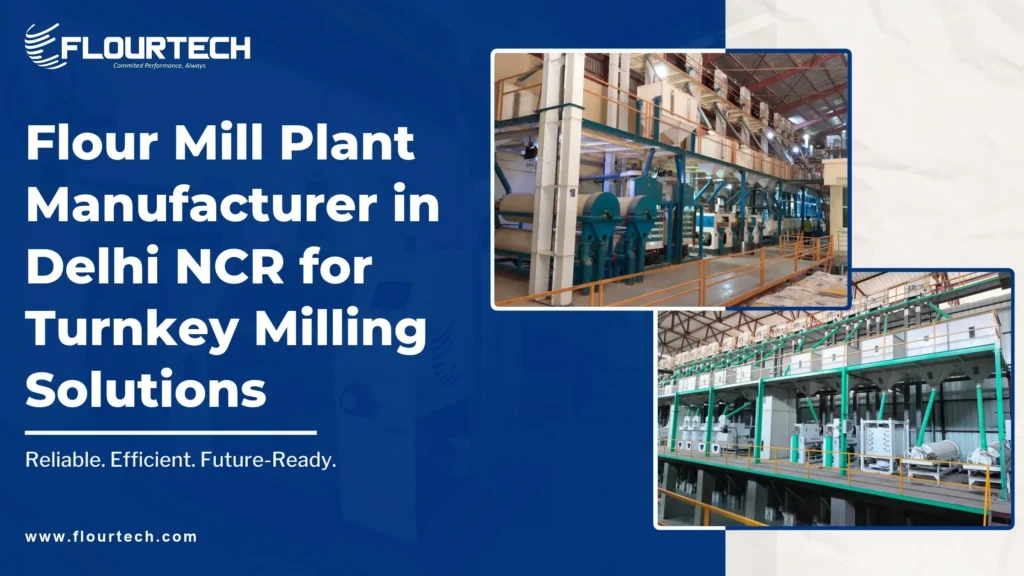
Flourtech Engineers is a flour mill plant manufacturer in Delhi NCR, offering design, manufacturing, installation, and commissioning services for turnkey flour mill plants, including wheat flour, atta, and maida milling solutions across India.
This guide explains what a turnkey flour mill plant includes, the key decisions involved in setting up a plant, and what to consider before finalising a manufacturer.
What Does Turnkey Actually Mean?
A turnkey project means choosing one company to manage the major stages of your project, from process design and machinery supply to installation, commissioning, operator training, and after-sales support. Depending on the project requirements, it may also include guidance on civil work, electrical systems, and automation.
The main advantage is better coordination and having one team to contact throughout the project. For example, if the flour quality does not meet the required specifications during trial runs, the same team can review the machinery settings and milling process and make the necessary adjustments. Similarly, if you face any other issues or have questions after installation, you can contact the same company that handled your mill setup.
When cleaning, milling, and packing equipment is purchased from different suppliers, coordinating these systems becomes the owner’s responsibility. Each supplier may focus only on its own equipment, leaving the owner to manage any gaps between them.
A turnkey project helps reduce this burden by bringing the major stages under one coordinated scope.
What Does a Complete Flour Mill Plant Include?
A flour mill plant has five working sections. Here is what each one does and why it matters.
1. Wheat cleaning section: Separators, destoners, magnets, and scourers remove stones, metal, husk, dust, and other unwanted materials. Effective cleaning helps to protect downstream machinery, maintain product quality, and reduce unnecessary wear on milling equipment.
2. Tempering and conditioning: Wheat is mixed with water and left to rest for a specific period. This toughens the bran and softens the inner part, making it easier to separate bran from the inner part and improve flour yield. Proper conditioning is important for achieving consistent milling results and flour quality.
3. Milling section. Roller mills break the wheat open in stages (break passages), then reduce the endosperm into flour (reduction passages). The roller gap, speed, and corrugation are adjusted according to the type of wheat and product that you want to produce.
4. Sifting and Purification: Plansifters separate milled material according to particle size, while purifiers help separate bran particles from semolina and middlings. These processes help produce different flour streams and products like maida, suji, and atta, depending on the plant configuration.
5. Packing and Bulk Handling: This section includes weighing, bagging, and bulk storage systems such as silos, where required. Proper handling and packing help protect the finished product during storage and transportation.
Alongside these five sections, electrical, pneumatic, and control systems support the overall operation. Whether you can choose a basic or an automated setup, it can affect your labour cost, process control and production consistency over the long term.
Five Decisions That Shape Your Flour Mill Plant’s Performance
Before setting up a flour mill plant, it is important to consider a few key factors that can affect production, flour quality, operating costs, and long-term performance.
1. Choose Capacity According to Your Market Requirements
A larger plant is not automatically more profitable. A plant operating significantly below its planned capacity may increase the cost per tonne of production and leave equipment underutilised.
Consider the quantity of wheat you can reliably source and the volume of flour you can sell. Choose a capacity that matches your current market demand while allowing room for future expansion. A well-planned layout can also make it easier to increase capacity later without major structural changes.
2. Match the flow sheet to your product mix
A plant built for premium maida production and one designed for whole-wheat atta may require different process configurations.
Tell your manufacturer what products you want to produce, in what proportions, and for which customers, such as bakeries, retail markets, or institutional buyers. The process flow sheet should be designed around these requirements rather than following a standard template.
3. Plan for your wheat, not average wheat
Wheat from Punjab, Haryana, Uttar Pradesh, and Madhya Pradesh can differ in hardness, moisture, and protein content. Wheat also behaves differently under changing seasonal and storage conditions.
Ask your manufacturer how the plant will handle variations in wheat quality and whether the tempering section offers the flexibility needed to adjust water addition and conditioning time.
4. Treat dust safety as a design requirement
Flour dust is combustible and requires proper safety management. A mill that ignores dust control, earthing, aspiration and ventilation can face serious problems.
Ask how the plant manages dust collection and whether the electrical fittings, equipment and overall layout follow appropriate safety practices for dusty environments. Dust management should be considered during the design stage rather than added later.
5. Ask about spare parts before you buy
Components such as rollers, sieves, belts and bearings require regular inspection, maintenance or replacement.
Before placing an order, understand the availability of spare parts, the process for requesting technical assistance, and the after-sales support included in the agreement. This can help reduce unexpected downtime and make long-term plant maintenance easier.
Why Location Matters When Choosing a Manufacturer
Choosing a flour mill manufacturer near your plant can make machine inspection, transportation, and service coordination easier.
- Easy Factory Visits
You can visit the manufacturer’s factory and see the machines being manufactured. This helps you understand the machinery, manufacturing process, and available equipment before deciding.
- Faster Service and Support
If your flour mill faces a technical problem, timely service support can help reduce downtime. A manufacturer offers easier access to project coordination and service support across nearby regions, depending on the service network.
- Lower Transportation Costs and Delivery Time
Flour mill machinery is heavy and requires proper transportation. Choosing a manufacturer located closer to your plant can help reduce transportation costs and make delivery schedules easier to manage.
- Better Access to Wheat and Testing Facilities
Delhi NCR is well connected to major wheat-producing regions. This makes it easier to arrange wheat samples, evaluate milling performance, and run machine trials with the type of wheat you plan to process.
How a Turnkey Flour Mill Project Works: Step by Step
A turnkey flour mill project involves several stages, from understanding your requirements to installing the machinery and providing support after the plant starts operating. Here is how each stage works.
| Stage | What happens |
|---|---|
| Enquiry and requirement study | Understanding capacity, products, wheat type, budget, and available land |
| Layout and flow sheet | Process flow design, machinery layout and building requirements |
| Manufacturing | Machine fabrication and quality checks |
| Dispatch and installation | Machinery placement, alignment and site connections |
| Trial runs | Testing with your wheat and adjusting machine settings |
| Training and Handover | Operator training and project documentation |
| After-sales support | Technical assistance, spare parts and servicing |
What Affects the Cost of a Flour Mill Plant?
The cost of a flour mill plant depends on individual project requirements. A one-size-fits-all quotation may not accurately reflect the machinery, installation, and infrastructure needed for your project.
The main factors affecting the overall cost include:
- Plant Capacity: Required production capacity, usually measured in tonnes per day.
- Level of Automation: Basic, semi-automatic, or automated control systems.
- Product Range: Whether the plant produces atta, maida, suji, bran, or multiple products.
- Machinery Configuration: Quality and specifications of rollers, sifters, and electrical components.
- Building and Civil Work: Building design, foundation, and available infrastructure.
- Packing and Storage: Bagging equipment, weighing systems, and storage requirements.
- Power and Utilities: Electrical load, pneumatic systems, and other utility requirements.
A cheaper quote often leaves out items such as electrical work, installation, aspiration, or other supporting systems. Always compare quotations line by line and check the complete scope of supply before making a decision.
Why Businesses Choose Flourtech Engineers
Flourtech Engineers has been working in grain processing engineering since 1988, providing machinery and plant solutions for different grain processing requirements. The company focuses on project requirements, machinery selection, and coordination across different stages of flour mill plant setup.
- Project Planning: Plant layouts and process flow designed according to production capacity and product requirements.
- Machinery Manufacturing: Equipment for different stages of wheat cleaning, milling, sifting, and material handling.
- Installation and Commissioning: Support during machinery installation, alignment, and trial runs.
- Automation Integration: Integration of suitable automation and control systems based on project requirements.
- Technical Support: Assistance with machinery-related queries, maintenance, and spare parts.
With experience in grain processing, Flourtech Engineers works on milling projects with a focus on suitable plant configuration, coordinated execution, and long-term operational requirements.
Conclusion
Setting up a flour mill plant requires careful planning, suitable machinery, and a clear understanding of production requirements. From wheat cleaning and conditioning to milling, sifting, and packing, each stage contributes to flour quality, production efficiency, and overall plant performance.
Choosing the right flour mill plant manufacturer in Delhi NCR can make the process easier by ensuring proper coordination between plant design, machinery installation, and commissioning. It is also important to consider future production needs, maintenance requirements, and technical support before finalising a project.
Flourtech Engineers offers turnkey flour mill plant solutions based on individual project requirements, helping businesses plan and establish milling facilities with a focus on consistent production and long-term operational efficiency.
Planning to Set Up a Flour Mill Plant?
Share your required production capacity, product range, and project location with Flourtech Engineers. Our team can help you understand the suitable plant configuration, machinery requirements, and project scope.
Call / WhatsApp: +91 9663594709, +91 8826731010
Email: info@flourtechindia.in
Visit our website: www.flourtech.com