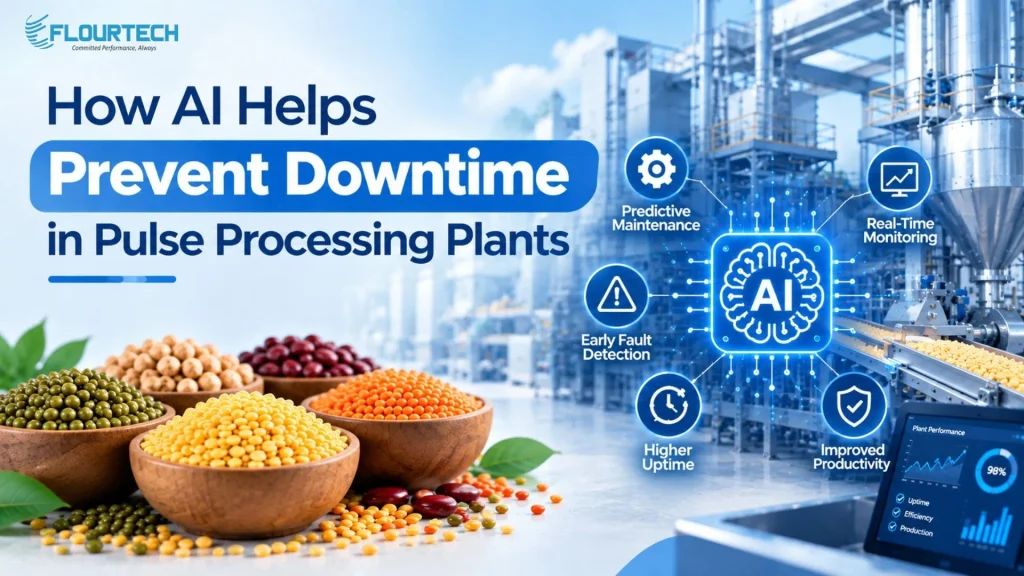
Pulse processing plants are becoming increasingly automated as processors look for better control, consistent production, and fewer unexpected interruptions. While modern machines have improved processing capabilities, keeping a plant running smoothly also depends on how quickly operators can identify and respond to problems.
A production interruption does not always begin with a major machine failure. Changes in material flow, moisture levels, product accumulation, elevator movement, bin levels, or equipment performance can create problems if they are not noticed in time.
This is where automation, sensors, PLC-based controls, and increasingly. Artificial intelligence can work together to provide better visibility and earlier warnings.
Moving From Reactive Maintenance to Preventive Monitoring
In a traditional setup, maintenance often happens according to a fixed schedule or after a problem has already occurred. Modern processing plants are increasingly using continuous monitoring to understand what is happening across different stages of production.
Sensors collect information from various parts of the plant, while PLC systems receive signals, control equipment, and generate alerts when a defined abnormal condition occurs. When this information is monitored continuously, operators can get a clearer view of the plant and respond to issues at an earlier stage.
AI can add another layer to this system. By analysing operational data and identifying unusual patterns, AI-based systems can support early detection and help maintenance teams investigate potential issues before they develop into major interruptions.
The objective is not to replace existing automation. Instead, AI can work alongside these systems to make the information generated by the plant more useful and support better-informed maintenance decisions.
How Automation Helps Detect Process Problems Early
A modern pulse processing plant may have many machines, sensors, and control points working together. Each system has a specific role, but together, they can provide operators with a clearer picture of overall plant performance. Some automated systems and machines used in pulse processing plants can help improve process control, identify abnormal conditions, and maintain consistent output.
1. PLC-Based Alerts
The PLC is an important part of an automated processing plant. When an error or abnormal condition is detected through connected equipment or sensors, the PLC can generate an alert for the operator.
Instead of relying only on manual observation, operators can receive an indication that something requires attention. This can reduce the time between an issue occurring and the response.
2. Monitoring Moisture Conditions Automatically
Moisture is an important parameter in pulse processing because changes in moisture conditions can influence processing behaviour and product quality.
Automatic moisture monitoring systems such as Moismee can help operators keep track of moisture conditions without depending entirely on manual checks during the process. Continuous monitoring can make it easier to identify changes and take corrective action when required.
3. Maintaining Consistent Material Flow and Throughput
Consistent material flow is essential for maintaining smooth plant operation. A Flow Balancer can be used to monitor and manage material flow within the processing system, while an Online Weigher can provide information about the quantity or throughput of product moving through the processing line.
These systems give operators better visibility into material movement and help them understand what is happening during production and whether the process is operating as expected.
4. Monitoring Silo and Bin Levels to Avoid Storage Problems
Storage areas are another important part of a pulse processing plant. Without proper level monitoring, material can either accumulate beyond the desired level or fall below the required quantity.
High-level and low-level sensors installed in silos and bins can provide information about material levels. A high-level sensor can indicate when material reaches a specified upper level, while a low-level sensor can indicate when the material falls below a defined level.
Such information helps operators maintain better control over storage and material movement. It also allows them to respond before a storage-related issue affects the wider process.
5. Detecting Conveyor and Elevator Choking Before It Causes Downtime
Material choking can interrupt a continuous processing operation and may require immediate attention.
Overflow flaps used with conveyors can help manage situations where material begins to accumulate and can help reduce the risk of material choking.
Elevators can also be equipped with zero-speed monitoring systems. If an elevator stops operating as expected or a condition associated with product choking occurs, the system can generate an alert through the PLC.
Early notification allows operators to investigate the issue and take action before the interruption becomes more serious.
6. Ensuring the Right Material Goes to the Right Bin
Pulse processing plants may handle different varieties of raw materials, making accurate material routing important.
Pneumatic slide gates with indicators can help confirm the selected material path, while selector switches can be used to select the appropriate bin for storing different raw materials.
These systems provide operators with greater control over material movement and can help reduce the possibility of material being directed to an unintended storage location.
7. Monitoring Equipment Performance and Energy Consumption
Energy efficiency is becoming an increasingly important consideration for modern processing plants.
Monitoring power consumption can provide useful information about equipment performance. Changes in energy use may indicate a change in operating conditions and can give maintenance teams another parameter to consider when evaluating equipment performance.
Alongside this, dedicated pulse splitting equipment, including vertical atta chakki or splitter systems, supports the splitting stage of pulse processing and forms part of the wider automated processing line.
The objective is not to monitor one machine in isolation, but to maintain visibility across the complete process.
The Role of Small Sensors in a Large Processing Plant
Large processing machines often receive the most attention, but small sensors can play an equally important role in automation.
Different sensors can be installed at various points in the process to monitor conditions, detect errors, and send signals to the PLC or control system.
This creates a simple but important chain:
Sensor → Control System → Alert → Operator ActionWhen information from multiple points is available through a central control system. Operators can get a better understanding of what is happening throughout the plant.
Over time, this operational data can also provide a foundation for more advanced analytics.
Where AI Fits Into Pulse Processing
AI becomes particularly useful when a plant generates a large amount of operational data.
Instead of looking at individual alerts separately, AI-based analytics can potentially analyse current information alongside historical operating patterns. This can help identify unusual changes that may require further inspection.
For example, changes in vibration, temperature, load, flow, or other operating parameters may provide early indications that equipment or process conditions need attention.
AI should not be viewed as a system that can predict every machine failure with certainty. Its practical value is in helping identify patterns and potential warning signs earlier. This allows plant teams to investigate and plan maintenance more effectively.
This supports a shift from:
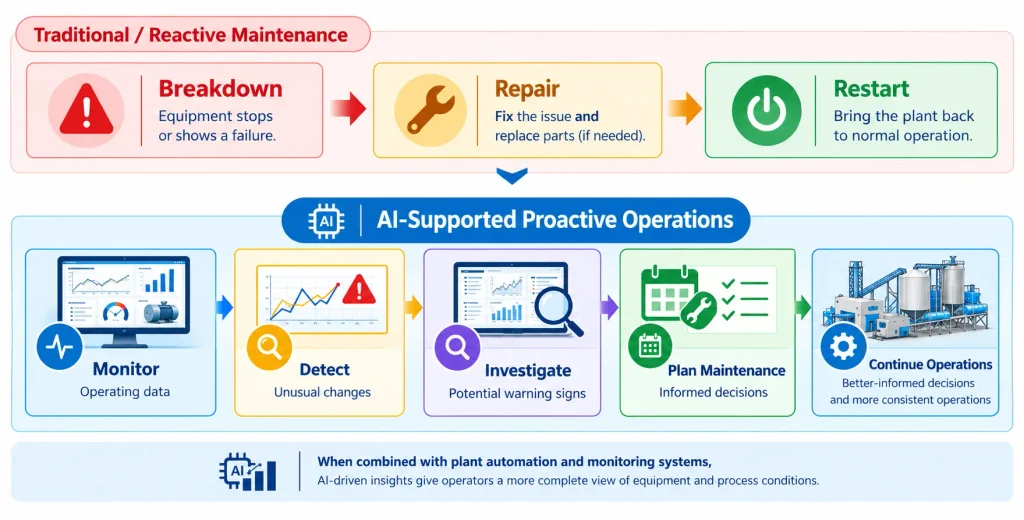
When combined with plant automation and monitoring systems, these insights can give operators a more complete view of equipment and process conditions.
From the Control Room to the Mobile Screen
Another important development in modern plant automation is remote monitoring.
With an appropriate monitoring and control setup, selected machine status, alarms, process information, and production-related parameters can be made available through mobile interfaces.
This means authorised users can stay informed about plant conditions even when they are away from the processing facility.
For a mill owner or plant manager, this can provide greater visibility into day-to-day operations. Instead of relying entirely on someone being physically present in the control room, the team can access important information remotely and respond when needed.
What the Future of Pulse Processing Could Look Like
The future of pulse processing is unlikely to depend on one technology alone. The greater opportunity lies in bringing machines, sensors, PLCs, monitoring systems, data, and human decision-making together.
Automation can control the process. Sensors can collect information. PLCs can generate alerts and manage defined operating conditions. Monitoring systems provide visibility, while AI and data analytics help identify patterns in the information being generated.
Together, these technologies can support a more connected and responsive processing environment.
The goal is not simply to add more automation to a plant. It is to create a system where useful information is available at the right time, potential problems can be identified earlier, and operators can make better-informed decisions.
Flourtech: Bringing Automation and Remote Visibility to Pulse Processing
For pulse processors looking to bring greater automation and process visibility into their plants. Flourtech Engineers integrate automation solutions into its turnkey pulse processing plants.
Its automation setup can include PLC-based controls, automatic moisture monitoring, flow balancing, online weighing, silo and bin level sensors, elevator zero-speed monitoring, pneumatic slide gates, selector switches, and other process sensors to support better control across different stages of the plant.
A key advantage of such a connected setup is remote visibility. With the right monitoring system in place, mill owners and authorised plant staff can check selected machine status, process conditions, alerts, and production-related parameters through their mobile devices, even when they are away from the plant.
This helps the plant team stay informed about operations and respond when attention is required. They can monitor operations without always being physically present in the control room.
By combining turnkey plant engineering, automation, process monitoring, and remote visibility. Flourtech Engineers help pulse processors move towards more connected, controlled, and efficiently managed operations.
For more details, visit our website: www.flourtech.com or contact us at +91-9663594709. You can also connect with us on WhatsApp at +91 8826731010.